You don't build a hero. One is dealt to you.
The tables roll your race, class, sub-class, gear, phobia, and the reason you walked into a maze in the first place. Complaints may be filed with the dice.
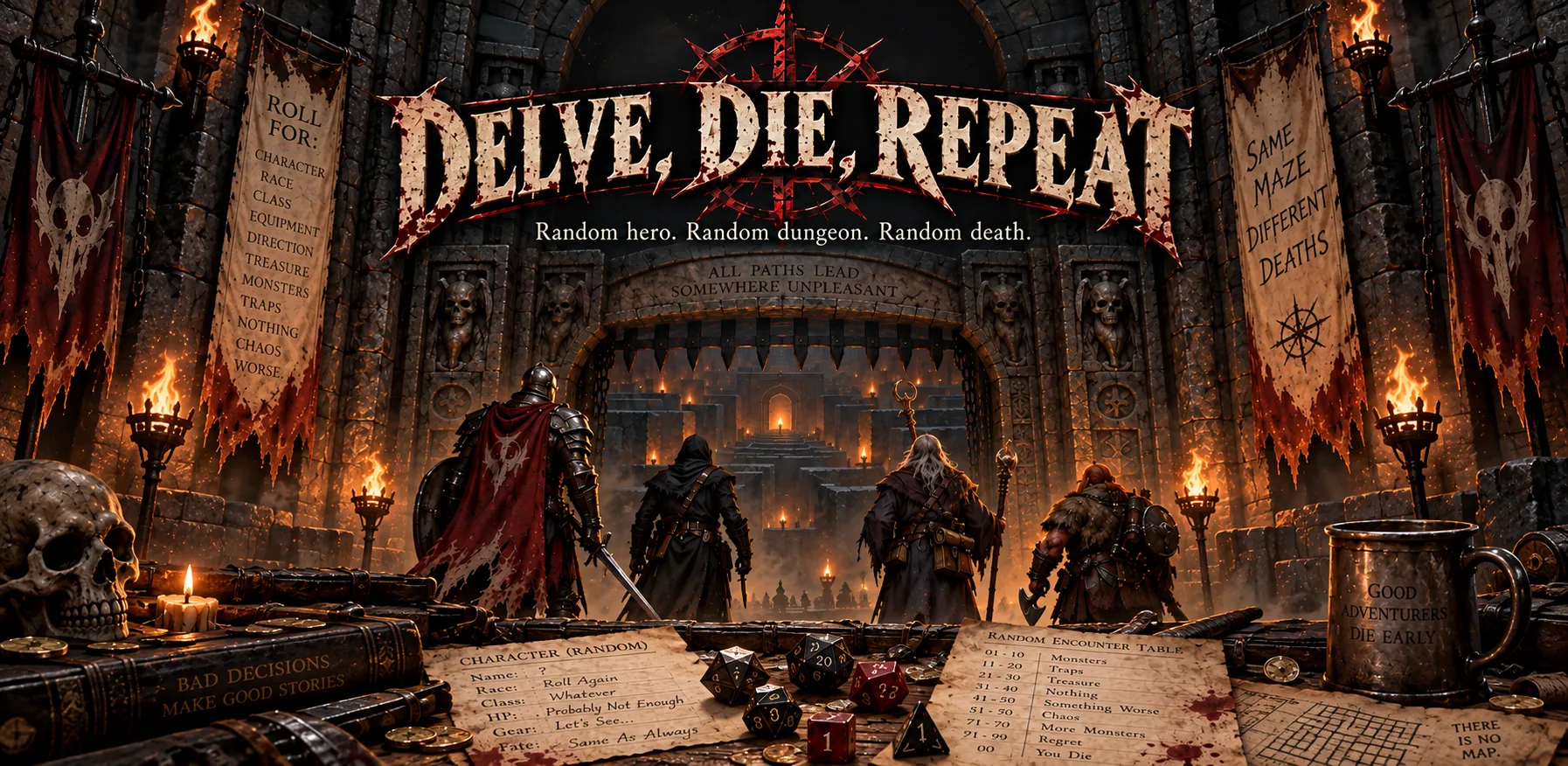
Darktier Studios · Android · /delve-die-repeat
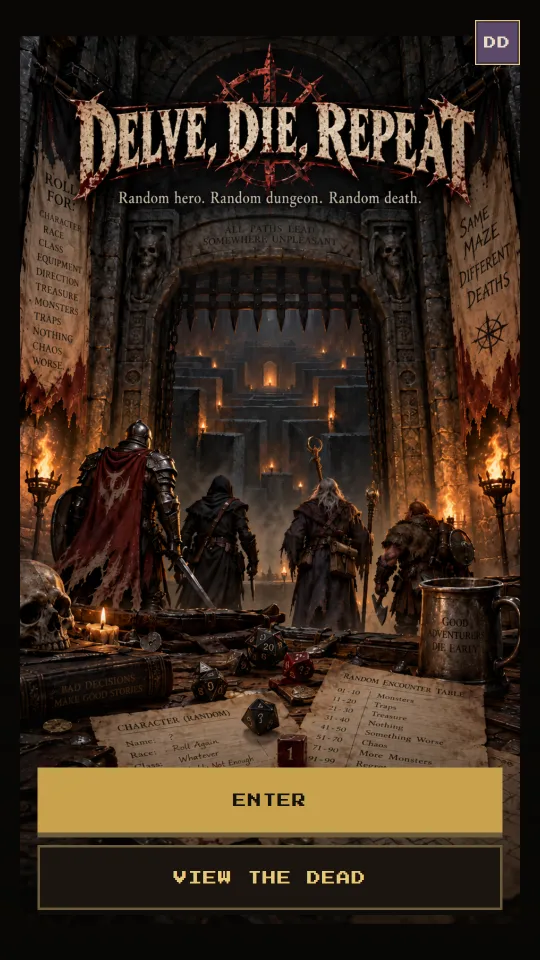
Random hero. Random dungeon. Random death.
An offline roguelike dungeon crawl based on Mazeworld, a tabletop RPG from 1994, back before most people had heard the word “roguelike”, and kept as crunchy, unfair, and funny as it was then. Roll an adventurer, descend the maze, die, read the epitaph, try again.
The tables roll your race, class, sub-class, gear, phobia, and the reason you walked into a maze in the first place. Complaints may be filed with the dice.
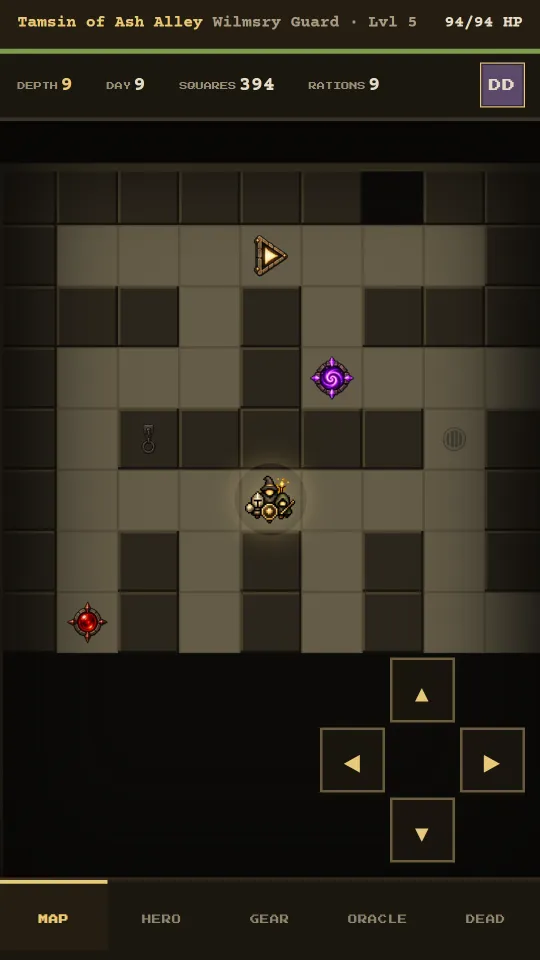
A procedurally generated maze with fog, one-way doors, chasms to leap, and walls to climb. Or fall from.
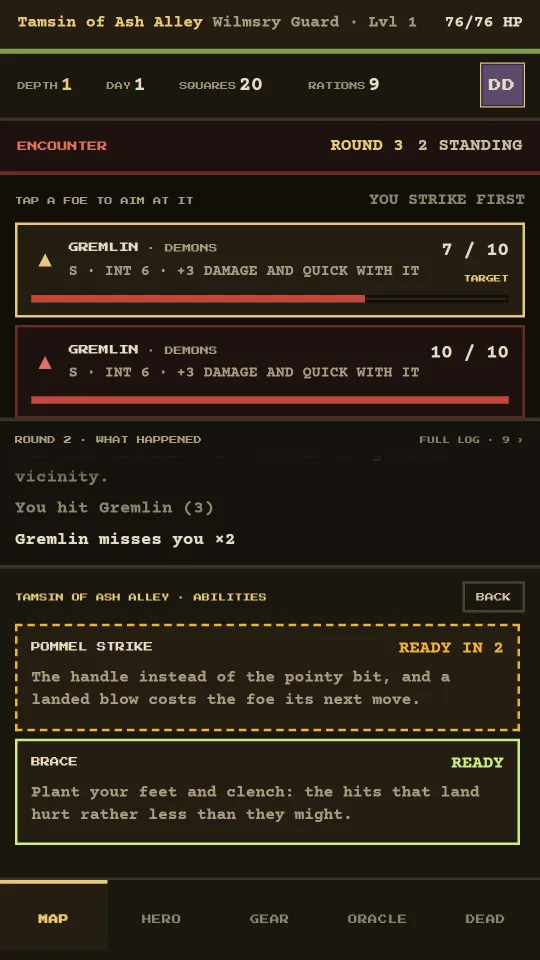
Strike, cast, flee, or talk your way out. You will always know exactly which number betrayed you.
With the warmth of a tax auditor. The graveyard remembers everyone, and the epitaphs are not kind.
Which is roughly how long most adventurers last. Put the phone down mid-fight and the monster will wait.
No ads, no in-app purchases. An optional public leaderboard, if you want the whole world to see how you died, under your Google Play Games name. It's the Compete setting: turn it off and nothing is sent, in full from the next time you open the game.
The rules date from 1994
Twenty-plus classes and sub-classes, six races, dozens of monsters with their own abilities, a full spell list, traps, treasure tables, and a random encounter table that includes “nothing” and “something worse.” The engine rolls real dice with real odds and tells you what it rolled.
You get the whole dungeon, and the dungeon gets the whole you.